Mauritania is one of the least-visited countries in the world, and that is precisely what makes it extraordinary. Twice the size of France with fewer than 5 million people, it offers vast Saharan landscapes, ancient caravan cities, a UNESCO-listed coastline, and a nomadic culture that has barely changed in centuries. This guide covers everything you need to plan your first trip – from the e-Visa process to safety, budget, top attractions, and cultural etiquette.
Why Visit Mauritania?
Mauritania is not a typical tourist destination. There are no luxury resorts, no package tours, and very little tourist infrastructure outside the capital. What it does offer is something increasingly rare: genuine, unscripted travel.
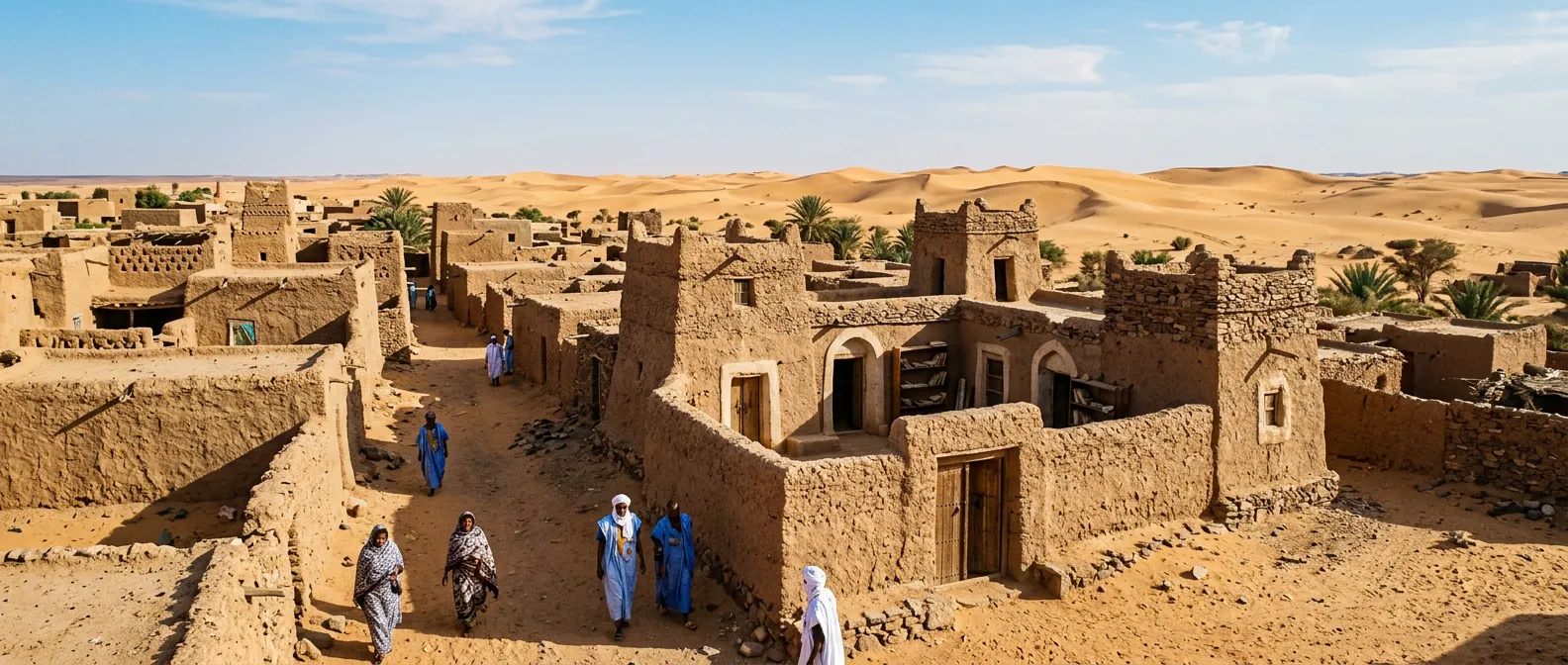
The Sahara Desert dominates the country – endless dunes, rocky plateaus, and ancient towns built from stone and sand. The legendary Iron Ore Train crosses 700 km of desert, one of the longest and most dramatic train rides on earth. The medieval city of Chinguetti, a UNESCO World Heritage Site, was once a center of Islamic scholarship and still holds libraries with centuries-old manuscripts.
Along the Atlantic coast, Banc d’Arguin National Park protects one of the world’s most important bird nesting sites, where desert dunes meet the ocean. In Nouakchott, the capital, the Port de Pech is one of West Africa’s most photographed fishing harbors.
If you are looking for an authentic, off-the-beaten-path adventure, Mauritania delivers.
Is Mauritania Safe to Visit?
The US State Department rates Mauritania as Level 2: Exercise Increased Caution. The UK Foreign Office advises against travel to border regions with Mali, Burkina Faso, and Western Sahara. The Canadian government recommends a high degree of caution overall.
What this means in practice:
- The main tourist route (Nouakchott, Atar, Chinguetti, Ouadane) is considered safe for travelers
- Border areas with Mali and Burkina Faso should be avoided entirely
- The eastern desert regions near the Algerian border require military permits and are not recommended
- Traveling with a local guide or organized tour significantly improves safety
- Petty crime exists in Nouakchott – keep valuables secure and avoid walking alone at night
Most travelers who stick to established routes report positive experiences. The Mauritanian people are widely described as welcoming and hospitable, especially outside the capital. Registering with your embassy (US citizens: STEP program) before travel is recommended.
For travelers from specific countries, see our guides on Mauritania visa for US citizens and Mauritania visa for UK citizens.
Visa and Entry Requirements
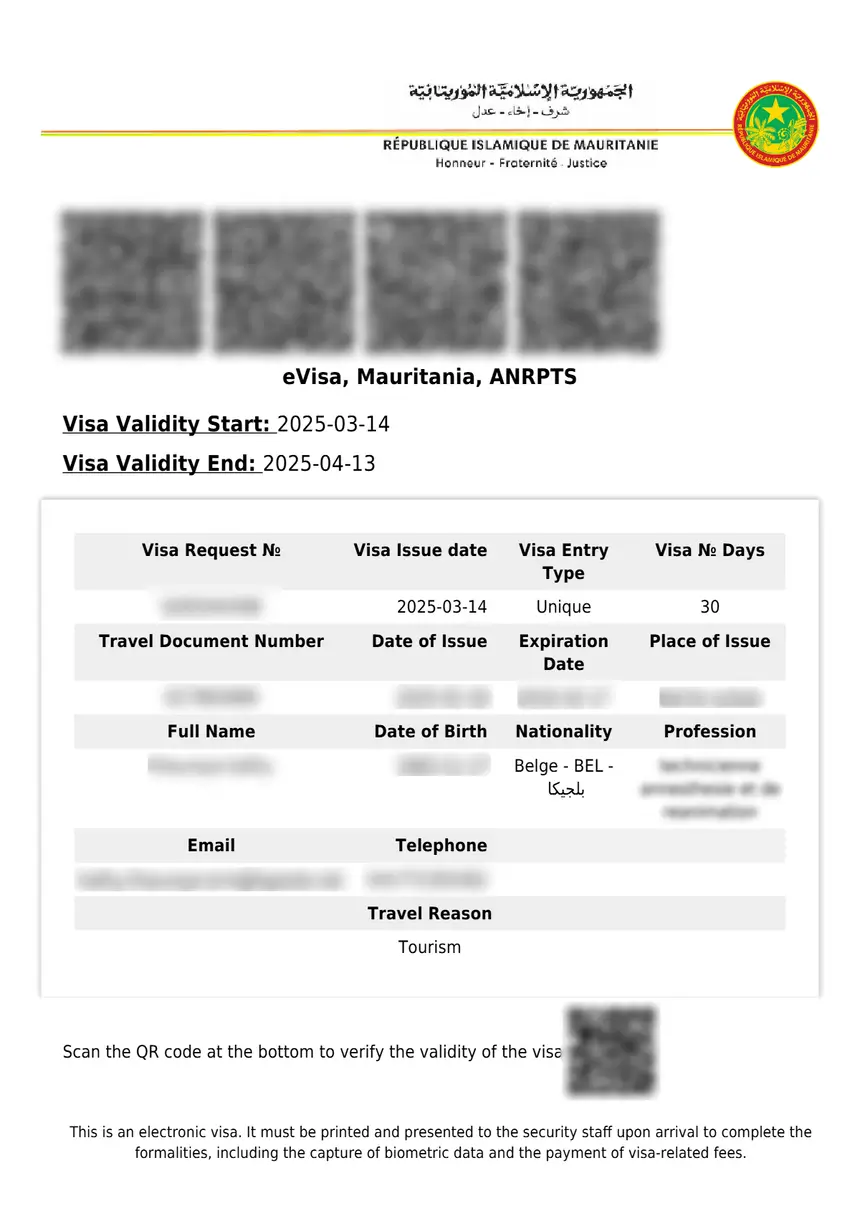
Since January 2025, all foreign nationals (except those from visa-exempt countries) must apply for an e-Visa online before traveling to Mauritania. Visa on arrival is no longer available, and Mauritanian embassies no longer issue traditional visa stamps.
Key visa facts:
- Apply through the official portal: anrpts.gov.mr
- Passport must be valid for at least 6 months beyond your entry date
- Processing takes 3-7 business days (can be longer in peak season)
- The visa fee is paid on arrival in cash (EUR or USD) – bring exact change
- No ATM is available in the visa processing area at the airport
For a complete walkthrough, see our how to apply for a Mauritania visa guide, and for the full cost breakdown, visit our Mauritania visa fees page.
Yellow fever vaccination is mandatory if you are arriving from a country with yellow fever risk. Get vaccinated at least 10 days before travel and carry your International Certificate of Vaccination with your passport.
For the complete list of documents, see our Mauritania visa requirements page.
Best Time to Visit Mauritania
Mauritania has a desert climate with extreme heat in summer and pleasant temperatures in winter. Timing your visit correctly makes a significant difference.
| Season | Months | Temperature | Conditions |
|---|---|---|---|
| Cool/Dry (best) | November – February | 20-25°C days, 10-15°C nights | Ideal for desert travel, comfortable sightseeing |
| Hot/Transition | March – April | 25-35°C | Still manageable, warming up |
| Extreme heat | May – September | 40-45°C+ | Oppressive heat, avoid desert travel |
| Rainy (hivernage) | July – September | 30-35°C with humidity | Brief rains in the south, roads may flood |
The best time to visit is November through February. Desert nights can be cold (dropping below 10°C), so bring warm layers even in the cool season. March and April are still acceptable but increasingly hot. Avoid June through September unless you are prepared for extreme heat.
For visa-exempt nationals planning short visits, our Mauritania visa on arrival page explains the current entry rules.
Top Things to See and Do
1. Chinguetti – The Seventh Holy City of Islam
This UNESCO World Heritage Site is a medieval trading town founded in the 13th century. Its ancient libraries hold thousands of manuscripts on astronomy, theology, and law. The sandstone mosque and minaret are iconic, and the surrounding dunes of the Adrar Plateau are spectacular. Chinguetti is often half-buried in sand – a hauntingly beautiful sight.
2. The Iron Ore Train
One of the world’s most extraordinary rail journeys. The train carries iron ore from the mines at Zouerate to the port of Nouadhibou – a 700 km journey across the open Sahara. Passengers ride on top of the ore hoppers (or in a basic passenger car). The journey takes 12-18 hours and is an unforgettable desert experience. Bring warm clothes, food, water, and a scarf for the dust.
3. Banc d’Arguin National Park
A UNESCO World Heritage Site where the Sahara meets the Atlantic Ocean. The park protects one of the world’s most important nesting sites for migratory birds – millions of flamingos, pelicans, and terns. The landscape of white sand dunes plunging into turquoise water is stunning. Access is by boat from the fishing village of Iwik.
4. Terjit Oasis
A palm-fringed oasis in the Adrar region with natural springs and shaded pools. It is the perfect place to rest between desert excursions. The cool water and green vegetation create a striking contrast with the surrounding rock and sand.
5. Nouakchott
The capital is not a beautiful city by conventional standards, but it is fascinating. Key sights include:
- Port de Pech – colorful fishing harbor where traditional pirogues bring in the daily catch
- Camel Market – one of the largest in West Africa, a chaotic and authentic experience
- Saudi Mosque – the city’s most impressive landmark
- National Museum – small but interesting collection of Mauritanian artifacts
6. Ouadane
Another ancient caravan town and UNESCO World Heritage Site, located deeper in the desert than Chinguetti. It requires a 4×4 and a guide to reach but rewards visitors with dramatic cliff-top ruins and extraordinary desert panoramas.
7. The Richat Structure (Eye of the Sahara)
A massive geological formation – a 40 km wide circular feature visible from space. Located in the Adrar region, it requires a dedicated off-road excursion to reach. One of the most remarkable natural wonders in Africa.
Getting to Mauritania
By Air
Nouakchott-Oumtounsy International Airport (NKC) is the main gateway. International flights operate from:
| Airline | Route | Frequency |
|---|---|---|
| Royal Air Maroc | Casablanca (CMN) | Daily |
| Turkish Airlines | Istanbul (IST) | Regular |
| Air France | Paris (CDG) | Seasonal |
| Air Senegal | Dakar (DSS) | Regular |
| Tunisair | Tunis (TUN) | Regular |
| Binter Canarias | Gran Canaria (LPA) | Occasional |
Royal Air Maroc from Casablanca is the most popular route for international travelers. Note that many flights arrive very late at night (around 2 AM), so arrange airport transfer with your hotel in advance.
By Land
Mauritania has road borders with Senegal, Mali, and Western Sahara (Morocco). The Senegal border crossing at Rosso is the most commonly used. The Morocco/Western Sahara crossing near Nouadhibou is possible but passes through a former minefield zone – stay on the marked road. Border crossings with Mali are not recommended due to security concerns.
Money and Budget
Mauritania is a cash-only economy. International credit and debit cards are rarely accepted, even in the capital. ATMs exist in Nouakchott but are unreliable. Withdraw enough cash before leaving the capital.
Currency: Mauritanian Ouguiya (MRU). Euros and US dollars can be exchanged at banks and informal exchange offices. Bring clean, newer bills.
Daily Budget Estimate
| Category | Budget Traveler | Mid-Range | Comfortable |
|---|---|---|---|
| Accommodation | $15-25 | $40-70 | $80-150 |
| Food | $5-10 | $15-25 | $30-50 |
| Transport | $10-20 | $30-60 | $80-150 (4×4 + driver) |
| Activities/Entry fees | $5-10 | $15-30 | $30-50 |
| Daily Total | $35-65 | $100-185 | $220-400 |
Tipping is appreciated but not mandatory. Round up restaurant bills and tip guides and drivers at the end of a trip. 500-1000 MRU per day for a guide is a reasonable benchmark.
Where to Stay
Accommodation in Mauritania ranges from basic guesthouses to decent mid-range hotels.
- Nouakchott: The widest selection. Hotels like Hotel Marhaba, Auberge Menata, and Azalai Hotel offer varying levels of comfort. Budget options exist but can be basic (no hot water, intermittent electricity).
- Atar / Chinguetti / Adrar region: Simple auberges and desert camps. Some guesthouses in Chinguetti offer rooftop terraces with desert views. Desert camps provide mattresses under the stars.
- Nouadhibou: A few modest hotels near the port. Limited options.
Book in advance during the cool season (November-February), especially in Chinguetti, which is increasingly popular with adventure travelers.
Cultural Etiquette and Practical Tips
Dress Code
Mauritania is an Islamic republic. Dress modestly, especially outside the capital. Both men and women should cover shoulders and knees. Women are not required to wear a hijab, but loose-fitting clothing that covers arms and legs is respectful and practical. Avoid tight or revealing clothing.
Alcohol
Alcohol is prohibited in Mauritania. There are no bars, liquor stores, or restaurants that serve alcohol. Do not attempt to bring alcohol into the country – it may be confiscated at customs.
Photography
Always ask permission before photographing people, especially women. Some Mauritanians are uncomfortable being photographed. Military installations, government buildings, and airports are off-limits for photography.
Greetings
Greetings are important in Mauritanian culture. A handshake and “Salam alaikum” (peace be upon you) goes a long way. In more traditional settings, men may place their hand over their heart after shaking hands. Tea ceremony (atay) is central to social life – accepting tea when offered is a sign of respect.
Language
Arabic is the official language. French is widely spoken and is the practical language for hotels, restaurants, and tour operators. English is not widely spoken outside the capital. Learning a few phrases in French or Arabic will make your trip significantly smoother.
SIM Cards and Internet
Official telecom providers do not sell SIM cards to tourists without a residency permit. The workaround is to buy a SIM at the Marche Capitale market in Nouakchott from informal sellers. A SIM costs around 1000 MRU (~23 EUR) and a 10 GB data package around 200 MRU (~4.50 EUR). Outside the capital, internet access is extremely limited. Do not count on eSIM providers – most do not cover Mauritania. Plan to be offline in the desert.
What to Pack
Essentials:
- Passport + printed e-Visa + yellow fever certificate
- Cash in EUR or USD (enough for entire trip)
- Headscarf or bandana (for desert dust and sand)
- Warm layers for cold desert nights
- Sunscreen (SPF 50+), sunglasses, wide-brimmed hat
- Sturdy closed-toe shoes for rocky terrain
- Sandals for camp and oasis visits
- Reusable water bottle (stay hydrated)
- Flashlight or headlamp (power cuts are common)
- Power adapter (Europlug, 220V)
- Basic first-aid kit
- Toilet paper and hand sanitizer (limited availability)
- VPN app on your phone (public Wi-Fi is not secure)
FAQs About Traveling to Mauritania
Is Mauritania good for tourists?
Mauritania is an excellent destination for adventurous travelers seeking authentic, off-the-beaten-path experiences. It offers Saharan desert landscapes, UNESCO World Heritage Sites, and a rich nomadic culture. However, it requires more preparation than typical tourist destinations – infrastructure is limited and a basic level of French or Arabic is helpful.
Is it safe to travel to Mauritania now?
The main tourist route (Nouakchott to Chinguetti via Atar) is considered safe by most travel advisories. The US State Department rates Mauritania Level 2: Exercise Increased Caution. Border areas with Mali and Burkina Faso should be avoided. Traveling with a local guide or organized tour is recommended.
Can Americans go to Mauritania?
Yes. US citizens need an e-Visa, which they apply for online at anrpts.gov.mr before traveling. The visa fee is paid in cash on arrival. A yellow fever vaccination certificate is required if arriving from a risk country. See our detailed guide on Mauritania visa for US citizens.
Can you drink alcohol in Mauritania?
No. Mauritania is an Islamic republic and alcohol is prohibited. There are no bars, restaurants, or shops that sell alcohol. Bringing alcohol into the country is not permitted and may result in confiscation at customs.
Can you wear shorts in Mauritania?
Shorts are not recommended, especially outside the capital. Mauritania is a conservative Islamic country, and both men and women should dress modestly – covering shoulders and knees. Loose, lightweight long pants are more practical and culturally appropriate.
Do I have to wear a hijab in Mauritania?
Foreign women are not required to wear a hijab. However, modest dress is expected – covering arms, legs, and chest. A headscarf is useful for sun and dust protection in the desert, even if not required for religious reasons.
How much does a trip to Mauritania cost?
Budget travelers can manage on $35-65 per day. Mid-range travelers should budget $100-185 per day. Organized tours with 4×4 transport and a guide typically cost $150-300 per day. The main expenses are transport (especially 4×4 rental) and accommodation. Food is inexpensive. Cash in EUR or USD is essential – cards are not accepted.
What is the best time to visit Mauritania?
November through February is the ideal period, with daytime temperatures of 20-25°C and cool desert nights (10-15°C). March and April are still acceptable but increasingly hot. Avoid May through September when temperatures exceed 40-45°C.
Do I need a guide to visit Mauritania?
While not strictly required in Nouakchott, a guide is strongly recommended for desert travel, especially in the Adrar region. Many attractions (Richat Structure, Ouadane, desert camps) require a 4×4 vehicle and local knowledge. Guides also help navigate French/Arabic language barriers and cultural situations.
Can I get a SIM card in Mauritania?
Officially, no – telecom providers require a residency permit. However, SIM cards can be purchased informally at the Marche Capitale market in Nouakchott for around 1000 MRU (~23 EUR). Outside the capital, mobile data coverage is extremely limited or nonexistent.